


HEFAT
HOSTILE ENVIRONMENT FIRST AID TRAINING

riki page - HEFAT
HEFAT - HOSTILIE ENVIRONMENT FIRST AID TRAINING
Known History
Hostile environment training for civilians traces back to the early 1990s, when the wars in the former Yugoslavia exposed how unprepared journalists and media teams were for combat zones. The concept is widely credited to Paul Rees, a former Royal Marine Commando, who while still serving was asked by a major media organisation to design a short pilot programme for staff heading into volatile areas. This then grew into what is now the internationally termed 4-6-day HEFAT course.
Note on dates: the first hostile environment courses for international journalists are reported to have run from 1993 (the earliest in London), while Centurion, the company Rees founded dates its own HEFAT operations to around 1995. Different sources cite slightly different years depending on whether they mean the first pilot course or the formal founding of the company.
The training method proved itself repeatedly in the conflicts of that era and drove a lasting shift in attitudes towards journalist safety. Today the BBC and others mandate that all staff deploying to designated hostile environments hold an in-date HEFAT certificate, renewed every three years, before they can be deployed, an expectation that has since spread across the wider media worldwide.
HEFAT is closely related to and often used interchangeably with, HEAT (Hostile Environment Awareness Training) and HEST (Hostile Environment Security Training). The core difference is emphasis: HEAT/HEST lean towards security awareness and threat avoidance, while HEFAT places equal weight on emergency first aid and trauma care. In practice most modern courses blend all three.

WHAT IS A HOSTILE ENVIRONMENT....-.
HEFAT: Understanding the environment is key to knowing the landscape and anticipating what to expect. This is essential reading for anyone operating in culture complex environments.
Structure
HEFAT courses typically run for four to six days in a residential setting, and are designed to enhance the safety and security of individuals working in hostile environments. Most programmes are immersive and hands-on, using realistic scenarios that simulate situations commonly encountered in such settings.
When choosing a training provider, it is essential to ensure that the course content is relevant to your needs, that the company holds appropriate experience, and that robust safety measures are in place during the training itself.
Important:
There is currently no accredited or regulated HEFAT standard. Course content and quality are therefore subjective and can vary significantly between providers. Exercise caution and due diligence when selecting a training company. 3
-
Centurion (Centurion RAS Ltd), "Hostile Environments & Emergency First Aid Training (HEFAT)", company history.
-
Resilience Academy, "We’ve taken HEAT training online", resilience-academy.org.
-
Frontline Club Charitable Trust, "Hostile Environment Training for Freelancers – Standard Curriculum Proposal", frontlineclub.com (PDF).
-
BBC, "High Risk Safety Guide – Training (HRG)", bbc.co.uk/safety.
-
International Women’s Media Foundation, "Physical Safety and Hostile Environment Training (HEFAT)", iwmf.org.
Content
TYPICAL MODULES INCLUDE:

KIDDNAPPING AWARENESS & PREVENTION Techniques for reducing the risk of abduction and practical strategies for escape or survival.

NAVIGATING CHECKPOINTS Best practices for approaching and passing through both official and unofficial security checkpoints.

ACTIVE SHOOTER RESPONSE Guidance on survival strategies during active shooter incidents, including situational awareness, escape, and evacuation.
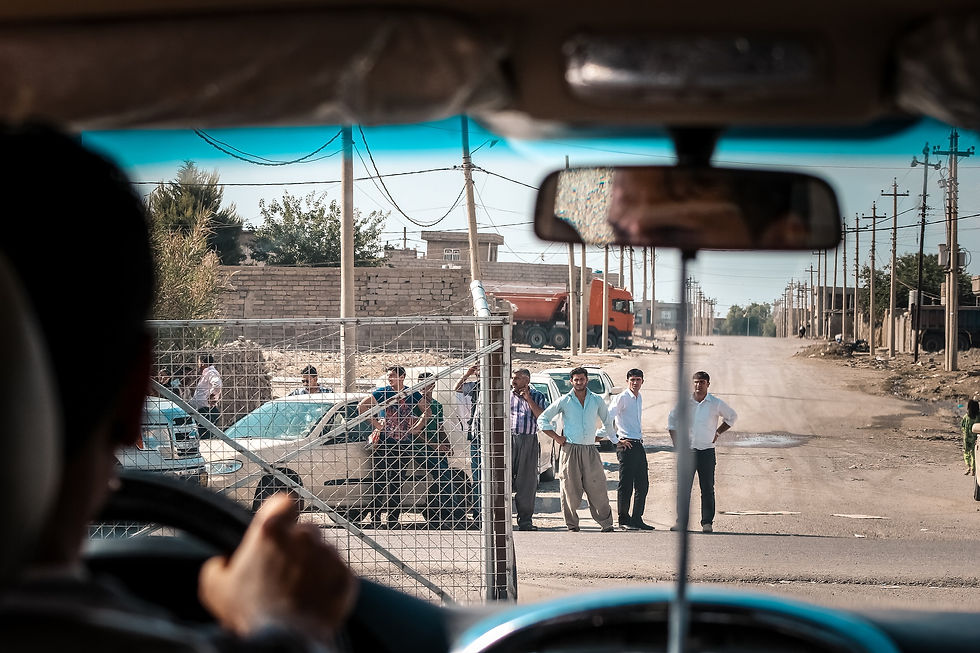
SURVIVING AMBUSHES Approaches to recognizing, avoiding, and responding to ambush situations while on foot or in vehicles.

COMMS & JOURNEY RISK MANAGEMENT How to plan routes, communicate your movements, and manage risk while traveling.

PERSONAL PROTECTIVE EQUIPMENT Selecting, carrying, and using protective gear such as ballistic vests and helmets.

BALLISTIC TRUMA Managing gunshot wounds and injuries caused by shrapnel.

IMPROVISED EXPLOSIVE DEVICES (IEDs) Recognizing signs of IEDs and landmines, and how to respond if discovered.

SAFE EMBARKATION & DISEMBARKATION Protocols for safely entering and leaving vehicles in hostile environments.

EMERGENCY & EVACUATION PLANNING Comprehensive preparation to ensure effective response during emergencies through established protocols, practiced evacuation routes, essential kits, crisis communication, contingency plans, and personnel accountability.
Hostile Environment First Aid Training
HEFAT
- KNOW THE ENVIRONMENT 🢃
DURATION FORMAT LOCATION INVESTMENT
5-6 Days Residential Longmoore, Hampshire £1,250 - £2,700

HOW ROCKY ROAD RESILIENCE DELIVERS IT BETTER
Because HEFAT is unregulated, the difference between providers comes down to credibility, realism and how far the training reflects the world as it is today. At Rocky Road Resilience, we treat the course as a duty of care, not a tick-box exercise and our RiCE® programme reframes what HEFAT can be.
RiCE® takes the traditional HEFAT foundation and deliberately moves it away from its original combat-zone-only content, stress-testing every element against the modern threat landscape. The classic fundamentals are still there - first aid, trauma care, kidnapping awareness, checkpoints, evacuation planning but we widen the lens so participants understand the full spectrum of risk they actually face, not just the one written for 1990s war reporters.
Crucially, RiCE® blends the guidance of ISO 31030:2021 (Travel Risk Management) into the course, so Health, Safeguarding and Culture sit alongside Safety and Security rather than being treated as afterthoughts. That broader framework develops wider situational awareness, a genuine culture of duty of care, and the social responsibility that modern organisations - and modern travellers - are now expected to demonstrate.
Here is what that looks like in practice:
Traditional foundations, modernised. - We keep every life-saving fundamental a credible HEFAT course must cover, then pressure-test it against today's threats - digital surveillance, civil unrest, drone awareness and mental resilience, so nothing is taught simply because it always has been.
01
The wider threat landscape. - RiCE® broadens the HEFAT understanding beyond hostile environments to the realities of complex deployments and activities, helping participants recognise and manage the full range of risks they will actually encounter.
02
Never online. - This is an awareness course, we have a responsibility to make sure learning is taking place in context. An online version will only inform, it does not allow participants to become intrinsically aware - it would be irresponsible for us, or anyone, to run or accept anything other than face-to-face delivery. We combine classroom learning with micro-immersive scenario-based exercises and refuse to reduce life-saving training to a "tick-box" activity.
03
Built on ISO 31030:2021. By taking a lead from the international Travel Risk Management guidance document, we place Health, Safeguarding and Culture on an equal footing with Safety and Security, building duty of care and social responsibility into the DNA of our courses.
04
Context and Wellbeing. - Scenarios are delivered within controlled, professionally risk-assessed conditions. Scenarios are micro-immersive to maximise learning and reduce exposure, we are not a Hollywood production. Each participant is supported to engage within their own physical and emotional limits.
05
Our Promise: In an unregulated market, we pride ourselves on being transparent about what our certificates represent, their validity period and when you should consider refreshing your knowledge. We avoid claiming the title of "expert" in the diverse field of travel risk, expertise in all areas is impossible. Instead, our mission is to lay a strong foundation through thoughtfully designed courses. Above all, we are teachers, not trainers. We facilitate a student-centred approach, learning from our participants’ experiences and perspectives and continuously testing these insights against our course framework, robust research, and the experience of our team and trusted affiliates.


